The Complete Guide to Vein Finder Technology
Vein finders, also called vein viewers, vein locators, or vein visualization devices, have become an essential tool across hospitals, clinics, and specialty practices worldwide. If you’re a nurse navigating difficult IV access, a phlebotomist drawing blood, or an aesthetic injector working around facial vasculature, understanding how this technology works can help you choose the right device and use it more effectively.
This guide covers everything you need to know: the science behind vein visualization, how modern infrared vein finders work, who uses them, and what to look for when evaluating a device.
Table of Contents
-
What Is a Vein Finder?
-
How Does a Vein Finder Work?
-
What Is Augmented Reality Vein Projection?
-
Types of Vein Finders
-
Who Uses Vein Finders?
-
What Does the Clinical Evidence Say?
-
What to Look for When Choosing a Vein Finder
-
Frequently Asked Questions
1. What Is a Vein Finder?
A vein finder is a device that shows a clinician the location of peripheral veins beneath the surface of the skin. The technology is also referred to as vein illumination, vein visualization, or near-infrared vein imaging.
Modern vein finders are handheld and non-contact, meaning the device is held above the patient’s skin without touching it. The vein map is projected directly onto the skin surface in real time, giving the clinician a live visual guide before and during a procedure. The core purpose is simple: to take information that is invisible to the naked eye and make it visible. Depending on the procedure, that means either finding a vein to access it, or mapping veins to avoid them.
You can learn more about how vein finder technology works on the NextVein technology page.
2. How Does a Vein Finder Work?
All vein finders rely on a fundamental property of blood: hemoglobin absorbs near-infrared (NIR) light more readily than the surrounding tissue in the body. This difference in light absorption is what makes veins detectable.
Here is the process step by step:
Step 1 — Infrared light is emitted. The device projects near-infrared light onto the patient’s skin. This light is invisible to the human eye.
Step 2 — The blood absorbs the light. Hemoglobin in the veins absorbs the near-infrared light. The surrounding tissue reflects it back.
Step 3 — The device captures the contrast. The device detects the difference between the light-absorbing veins and the light-reflecting tissue, creating a map of the vein structure.
Step 4 — The image is re-projected. Because infrared is invisible, the device must translate the vein map into a visible color and project it back onto the skin. The clinician sees the veins displayed directly on the patient’s surface.
This entire process happens in real time with no lag, allowing clinicians to track vein position dynamically as the patient or device moves.

3. What Is Augmented Reality Vein Projection?
The most capable vein finders use Augmented Reality (AR) to project the vein pattern back onto the patient’s skin. AR is a technology that enhances what you see with the naked eye by overlaying additional information onto the real world.
In the context of vein visualization, AR means the projected vein image is precisely aligned with the actual veins beneath the skin — what you see on the surface corresponds accurately to what is underneath. This is more manageable than devices that display a vein image on a separate screen, because the clinician never has to look away from the patient. The NextVein handheld vein finder uses AR projection, displaying the vein map directly on the skin in real time without requiring any gel, contact, or calibration.
4. Types of Vein Finders
Not all vein finders work the same way. Here are the main categories you will encounter:
Handheld Near-Infrared Projection Devices
The most widely used type in clinical settings. The clinician holds the device above the skin, and the vein map is projected directly onto the patient’s surface. No screen is required. These devices are portable, fast to set up, and require no consumables. The NextVein vein finder is this type of device.
Tablet or Screen-Based Devices
Some vein finders capture an infrared image and display it on a screen or tablet rather than projecting it back onto the skin. The clinician must look at the screen and then translate that image to the patient, which adds a layer of complexity and increases the chance of positioning error.
Wearable or Glasses-Based Devices
A smaller category where vein imaging is displayed through wearable eyewear. These are less common in clinical settings due to cost and practical limitations.
Transilluminators
Older technology that uses a light source placed beneath or against the skin to illuminate veins from below. These require contact with the patient and are generally considered less accurate than near-infrared projection devices for most applications.
For a side-by-side comparison of device performance, see the NextVein competitive comparison page.
5. Who Uses Vein Finders?
Vein visualization technology has applications across a wide range of clinical settings. The two main use cases are vein access (finding a vein to insert a needle) and vein avoidance (mapping veins to avoid them during a procedure).
Nurses and IV Access Teams Nurses performing peripheral IV starts are among the most common users of vein finders. Difficult venous access is a significant challenge in clinical settings, and vein finders have been shown to improve first-stick success rates and reduce the number of attempts required. Learn more about vein finders for IV access.
Phlebotomists Blood collection requires reliable venous access. Vein finders help phlebotomists locate suitable veins quickly, particularly in patients with difficult veins due to age, dehydration, obesity, or frequent prior draws. See the blood draw and phlebotomy applications page.
Aesthetic Injectors and Med Spa Practitioners In cosmetic procedures such as dermal filler injections, accidentally injecting into or near a vein is one of the most serious risks. Vein finders allow aesthetic practitioners to map facial vasculature before treatment, reducing the risk of vascular complications and bruising. Learn more about vein finders for cosmetic injections.
Hospitals and Surgery Centers Hospitals use vein finders across departments including emergency, oncology, pediatrics, and pre-operative care. Surgery centers rely on them to improve IV access efficiency and reduce scheduling delays caused by failed IV starts. See vein finders for hospitals.
Infusion and Cancer Centers Patients receiving regular infusions or chemotherapy often have compromised venous access due to repeated needle sticks and the effects of treatment. Vein finders help staff locate viable veins and reduce patient discomfort over the course of a long treatment course. Learn more about vein finders for infusion and cancer centers.
IV Spas and Hydration Therapy Clinics The growing IV therapy market, including hydration, vitamin infusions, and wellness treatments, relies on fast, reliable IV access in a non-clinical environment where patient experience is paramount. See vein finders for IV spas and hydration therapy.
Surgeons and Vascular Specialists Vein finders are used in surgical settings to locate veins for access and to verify results in procedures such as sclerotherapy. Learn more about vein finders for vascular surgery.
6. What Does the Clinical Evidence Say?
Handheld, non-contact vein visualization has been available for over 15 years. In that time, clinicians, hospitals, and universities have studied the technology across a range of applications. The body of evidence is substantial.
The Infusion Nurses Society has published a recommendation stating that clinicians should incorporate vein visualization technology as a routine strategy for patients with difficult or poor venous access, noting that the technology can improve success rates, decrease unsuccessful insertion attempts, and improve patient satisfaction. Research has also examined vein visualization in the context of peripheral venous access more broadly, with studies exploring outcomes related to first-stick success, patient experience, and procedural efficiency across hospital and specialty settings.
NextVein maintains a Clinical Reference Library that summarizes the key findings from published studies on vein visualization, with citations and links to the original sources for clinicians who want to review the evidence in detail.
7. What to Look for When Choosing a Vein Finder
Not all vein finders are equal in terms of performance, usability, or value. Here are the key factors to evaluate:
Projection vs. Screen Display
Devices that project the vein map directly onto the skin are generally faster and more intuitive to use than screen-based alternatives, because the clinician never has to look away from the patient or translate a screen image to the body.
Contact vs. Non-Contact
Modern handheld vein finders are non-contact — the device is held above the skin with no gel or direct contact required. This is faster to use, more hygienic, and more comfortable for patients than older transilluminator-style devices.
Setup Time
In a busy clinical environment, setup time matters. The best devices require no calibration, no gel, and no warm-up period. You pick them up and use them immediately.
Works Across Skin Tones
Near-infrared technology works across all skin tones and types, which is one of its significant advantages over visual assessment alone, where vein visibility varies considerably based on skin tone and lighting conditions.
Portability
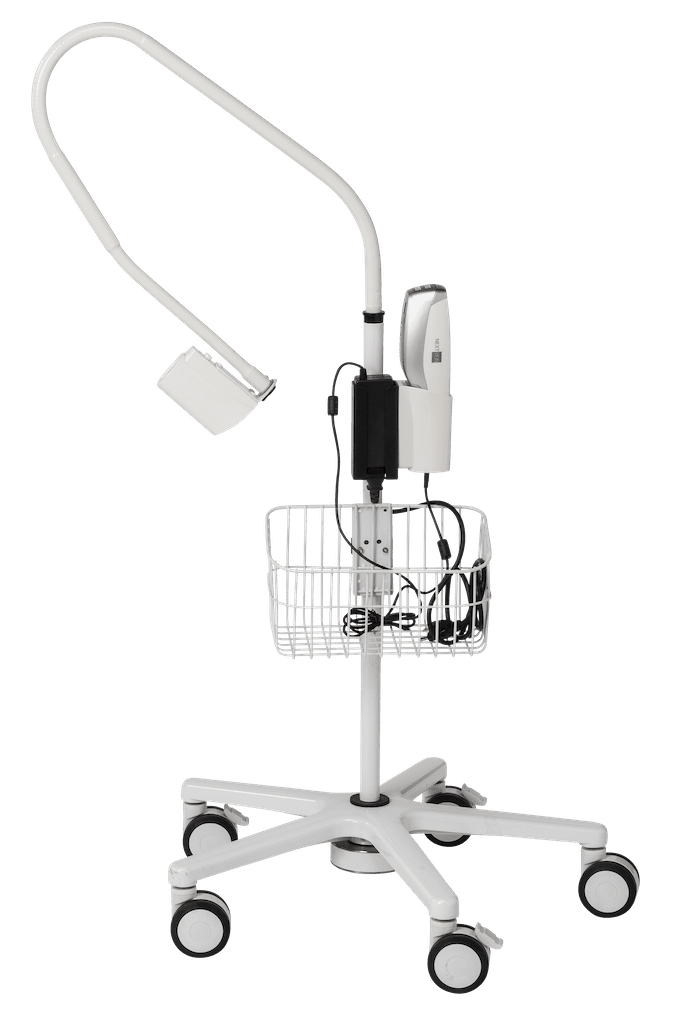
A handheld device that can be carried between patients and departments offers significantly more flexibility than a cart-mounted or fixed system. For facilities that need hands-free use, a wheeled stand is a practical add-on. See the NextVein wheeled stand.
Total Cost of Ownership
The purchase price of a device is only part of the cost. Consider warranty coverage, repair costs, and the availability of replacement units. NextVein offers a Total Protection Plan that provides full coverage for the device.
Try Before You Buy
For facilities making a significant procurement decision, the ability to evaluate a device in your own clinical environment before committing is important. NextVein offers a free evaluation system for qualified clinicians and facilities.
8. Frequently Asked Questions
What is the difference between a vein finder and a vein viewer?
These terms refer to the same category of device. Vein viewer, vein finder, vein locator, and infrared vein finder are all used interchangeably in clinical and commercial settings to describe near-infrared vein visualization devices.
Do vein finders work on all skin tones?
Yes. Near-infrared technology detects the hemoglobin in blood rather than relying on visual contrast at the skin surface, which means it works across all skin tones and types.
Is there gel or contact required?
Modern handheld vein finders are non-contact and require no gel. The device is held above the skin and the vein map is projected directly onto the surface.
How long does setup take?
With a device like the NextVein vein finder, there is no setup. You turn it on and use it. There is no calibration, no warm-up period, and no consumables to prepare.
Can vein finders be used for vein avoidance as well as vein access?
Yes. While vein finders are widely associated with IV access and blood draw, they are equally valuable for mapping veins to avoid during procedures — most notably in cosmetic injections where avoiding facial vasculature is a clinical priority.
Where can I see the device compared to other vein finders on the market?
The NextVein competitive comparison page shows side-by-side vein projection images comparing NextVein to other devices.