Vein Finders for IV Access
Peripheral IV access is one of the most frequently performed clinical procedures across healthcare settings. When it goes smoothly, it is a minor part of the patient’s experience. When it does not (when multiple attempts are needed) it becomes a source of pain, anxiety, and dissatisfaction that can color the patient’s entire encounter with your facility.
Vein visualization technology gives clinicians a real-time map of the patient’s veins projected directly onto the skin before the needle is placed. This takes the guesswork out of vein and valve location and supports a more confident, informed approach to IV access across patient types.
More Information Before Every Stick
Not all patients present with easily visible or palpable veins. Obesity, dehydration, age-related vein changes, and a history of frequent IV access can all make vein location challenging even for experienced clinicians. In these situations, vein visualization technology illuminates information that is otherwise invisible — making veins accessible that might otherwise require multiple attempts or escalation to a more advanced access technique.
Benefits
- Vein imaging displays a real-time map of veins and venous valves directly on the patient’s skin
- Can improve first-stick success rates for peripheral IV access
- May reduce patient discomfort and anxiety associated with multiple attempts
- Supports clinical confidence across a wide range of patient types
- Non-contact — no direct skin contact with the patient required
Why NextVein?
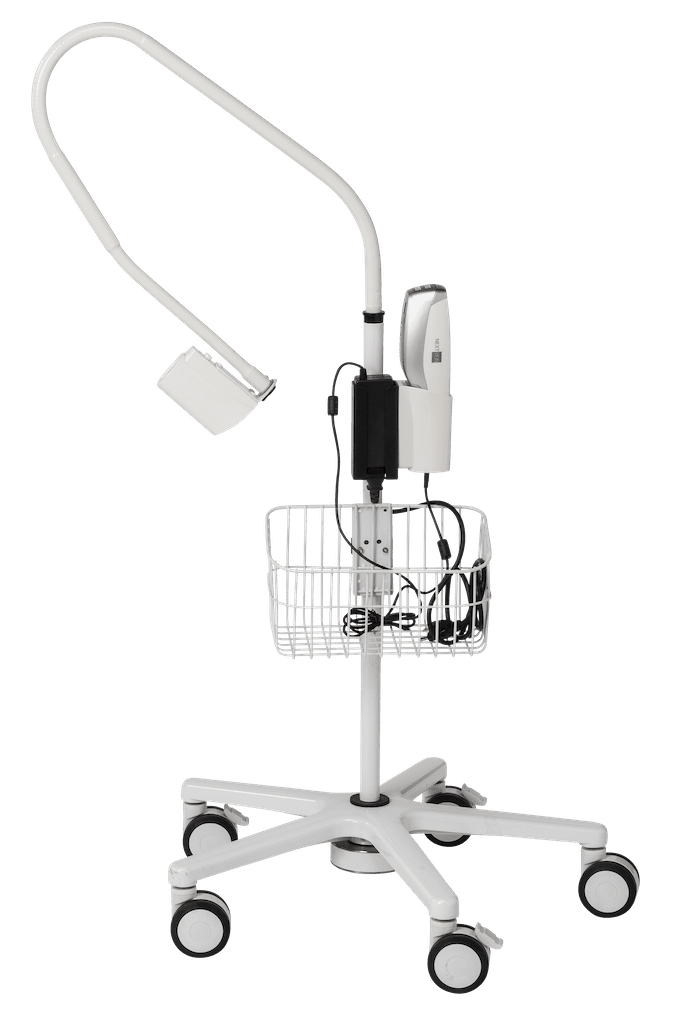
The NextVein V800NV uses near-infrared light to detect blood in the veins and projects that map back onto the skin in real time. It is lightweight at 12 ounces, rechargeable via USB-C, and ready to use in seconds. It also converts to hands-free use with the NextVein wheeled stand for procedures where both hands are needed.
Every system is backed by the NextVein Total Protection Plan, including a no-questions-asked warranty and an equipment forward-swap program.