
27 Questions About Vein Finders Answered
If you’ve ever struggled to locate a vein, or watched a patient wince through multiple attempts, you’ve probably wondered whether there’s a better way. Vein finders have been around for years, but questions about how they work, who uses them, and whether they actually make a difference remain common.
The Basics
1. What is a vein finder?
A vein finder is a medical device that makes veins visible on the surface of the skin without any contact with the patient. Most modern vein finders use near-infrared light to detect the position of blood in the veins and project a real-time map back onto the skin, giving clinicians a clear visual reference before a needle is placed.
2. How does a vein finder work?
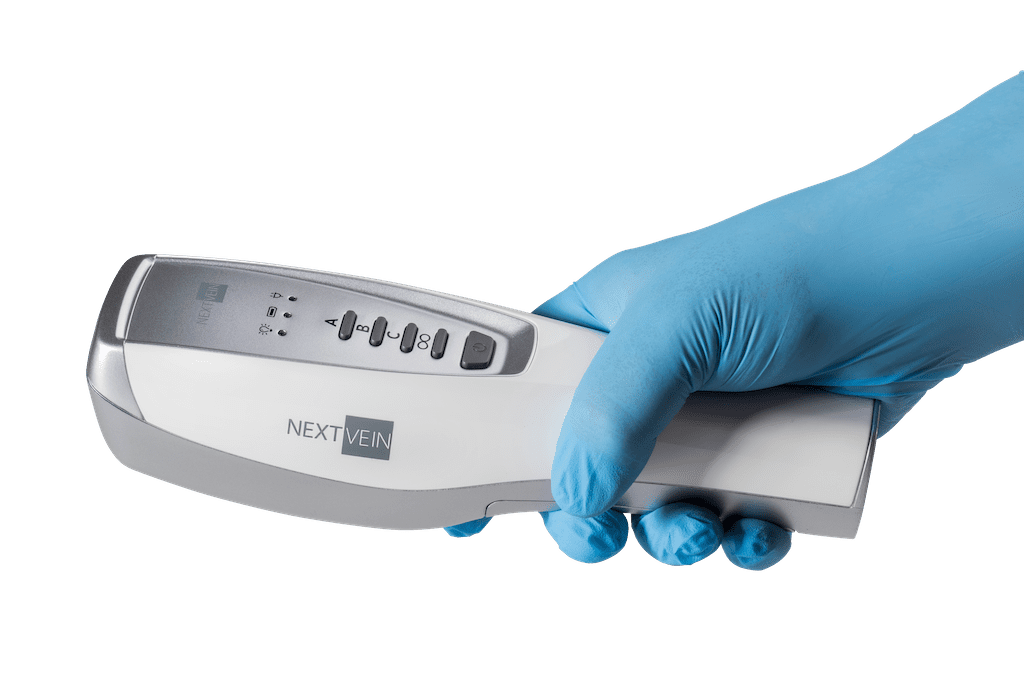
Vein finder devices rely on the principle that the hemoglobin in the blood absorbs infrared light more than the surrounding tissues in the body. The NextVein system uses infrared light, an infrared-sensitive camera, and advanced imaging software to detect vein location. A microprojector then shines this crisp, clear, and accurate vein map onto the patient’s skin before any procedure begins. You can learn more about how NextVein’s device works on the NextVein V800NV product page.
3. Is a vein finder the same as a vein viewer?
Yes. Vein finder, vein viewer, vein illuminator, and vein visualization device are all terms used to describe the same category of technology. They refer to devices that make subcutaneous (i.e., located under the skin) veins visible in real time, typically using near-infrared light. You may also see the technology referred to as near-infrared vascular imaging or NIR vein visualization.
4. Are vein finders safe?
The NextVein V800NV Vein Finder, as is true for most non-contact projection vein visualization systems, is a Class 1 510(k) exempt device in the US and a Class 1 device in the EU. As such it does not require FDA approval such as a 510K or PMA. Specific safety and usage guidance are found in the device’s instructions for use.
5. Do vein finders require any setup or calibration?
Most handheld near-infrared vein finders require no setup or calibration and are ready to use as soon as they are powered on. The NextVein V800NV, for example, requires no calibration or installation, no dedicated workstation, and no preparation time before use.
Clinical Evidence
6. Do vein finders actually improve first-stick success rates?
Studies suggest they can, particularly for patients who are difficult to access. A study published in Pediatric Emergency Care found an overall first-attempt success rate of 91.7% when a vein visualization device was used, compared to 47.4% with conventional methods.
7. Are the benefits across different patient populations?
Yes. Research consistently shows that the benefits of vein visualization technology across varied populations. A study examining patient characteristic factors across 384 subjects in 768 observations found that vein visibility using vein finders versus conventional methods was significantly higher in obese patients (approximately 1.8 times higher) and in dark-skinned patients (approximately 1.7 times). When an infrared vein finder was used, the number of identifiable cannulation sites increased substantially on average across all subgroups (approximately 1.6 times higher). Studies also suggest benefit in pediatric patients, elderly patients, patients undergoing repeated IV access, and patients who are dehydrated.
8. What does the evidence say about patient pain?
Studies have reported reductions in patient-reported pain when vein visualization technology is used. A study of pediatric patients aged 0 to 3 years (Demir and Inal, 2018) found a 43% reduction in pain scores when vein visualization was used compared to standard technique, alongside an 83% improvement in first-stick success rate, a 28% reduction in the number of attempts required, and a 74% reduction in procedure duration. Patient satisfaction with the procedure also tends to improve when fewer attempts are needed, which is relevant to facilities tracking HCAHPS scores or patient experience metrics.
9. Is there evidence on reducing escalations?
Yes. One study examining vein visualization implementation at a hospital found a 45% reduction in escalations to a central IV team when a vein finder was used, along with an 81% improvement in the nurse’s ability to cannulate and a 93% success rate within one to two sticks. Reducing escalations matters not only for cost reasons but also because escalations delay care and increase patient anxiety. You can review this and related studies on the NextVein clinical reference library.
Who Uses Vein Finders
10. Which healthcare professionals use vein finders?
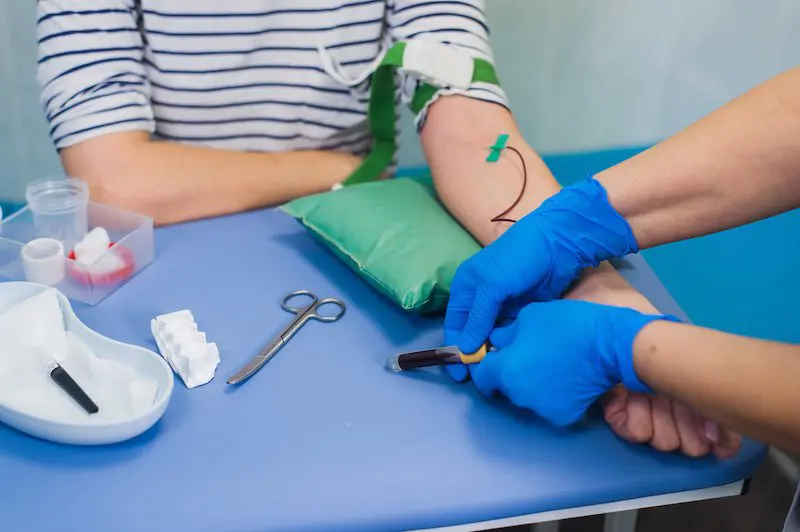
Vein finders are used across a wide range of clinical settings and professions. Nurses use them for peripheral IV placement and blood draws. Phlebotomists use them to improve specimen collection efficiency. Surgeons use them to identify and avoid superficial veins during procedures. Anesthesiologists use them for pre-operative vascular access. They are also used in imaging centers for contrast IV placement, in infusion and dialysis centers for repeated access, in dental practices for IV sedation, and increasingly in med spas and aesthetic practices for cosmetic injectable procedures and IV hydration therapy. You can explore the full range of clinical applications on the NextVein applications page.
11. Are vein finders used in aesthetic and cosmetic settings?
Yes, and this application is growing. In cosmetic injectable procedures, particularly for neuromodulators and dermal fillers, vein avoidance is a clinical priority. The face contains a complex network of superficial veins, many of which are not visible to the naked eye, and injecting near these vessels can lead to bruising and in more serious cases vascular complications. A 2025 observational study published in Dermatologica Sinica examined the use of near-infrared vein visualization during facial filler and botulinum toxin procedures and found it provided a useful real-time reference for identifying superficial vessels before injection. IV hydration and wellness practices are also adopting vein finders to support first-stick success and improve the patient experience. Learn more on the NextVein med spa and aesthetics page.
12. Are vein finders used in pediatric settings?
Yes, and studies in pediatric populations are among the most consistent in the literature. Children often present with smaller, more difficult-to-access veins, and multiple IV attempts cause significant distress in this population. Several randomized controlled trials have demonstrated improvements in first-attempt success rates and reductions in procedure time when vein visualization devices are used in pediatric patients, particularly in children with difficult venous access.
13. Are vein finders used in long-term care settings?
Yes. Patients in long-term care facilities often present with age-related vein changes. Veins become more fragile, more prone to rolling, and harder to palpate over time. When IV access is unsuccessful in these settings, the result is often a disruptive transfer to a higher level of care. Vein visualization technology can support more confident access at the facility level, potentially reducing unnecessary escalations.
Device Features and Specifications
14. What wavelength of light does a vein finder use?
The NextVein V800NV uses near-infrared light emitted by LEDs rather than lasers. This is a meaningful distinction. Some vein finders, including AccuVein, use laser-based technology that requires a scanning mechanism with moving parts to sweep the laser across the projection area. LED-based devices have no moving parts, which eliminates a potential source of mechanical wear over time and may contribute to greater long-term reliability. Both technologies project a real-time vein map onto the skin, and the difference lies in how the light is generated and delivered.
15. Do vein finders work on all skin tones?
Near-infrared imaging is generally effective across different skin tones. For patients with darker skin, who are often at higher risk for difficult access using unassisted methods, research has confirmed that the technology can identify more potential cannulation sites than conventional visualization methods.
16. Are vein finders handheld or stationary?
Both types exist. Handheld devices are portable and can be used at the bedside, in a treatment chair, or moved easily between patients. Some devices, including the NextVein V800NV, convert from handheld to hands-free use with a wheeled stand and optional continuous-on mode of operation, which are useful for procedures requiring both hands. Larger, stationary systems are also available from suppliers but are less common in everyday clinical settings.
17. How long does the battery last on a handheld vein finder?
Battery life varies by device. The NextVein V800NV rechargeable battery provides approximately 4.5 hours with charging time from a full discharge of approximately 3.5 hours via USB-C. In clinical practice, where the device is used intermittently rather than left running continuously, a single charge can cover a full shift comfortably.
18. How do you clean and disinfect a vein finder?
Because vein finders are non-contact devices, infection control is relatively straightforward. Most near-infrared vein finders can be wiped down with isopropyl alcohol or approved hospital disinfection wipes between patients. The specific approved cleaning agents vary by device, so the manufacturer’s instructions for use should always be consulted.
Practical Questions
19. How long does it take to learn how to use a vein finder?
Most near-infrared projection vein finders are designed to be intuitive and require minimal training. Clinicians typically become comfortable with the device within a few uses. The principle is straightforward: power on the device, hold it above the target area, and read the projected vein map on the patient’s skin. Some clinicians note a short adjustment period as they learn to select the best access site from the projected image.
20. Does a vein finder replace clinical judgment and technique?
No. A vein finder provides additional visual information, but it does not replace the clinician’s skill and judgment in selecting a site, anchoring a vein, and performing the access procedure. The device is a tool that enhances clinical decision-making, not a substitute for it.
21. Can a vein finder be used on the face?
Some near-infrared vein finders are used on facial tissue for the purpose of identifying superficial veins before cosmetic injectable procedures. The NextVein V800NV uses near-infrared LED light rather than laser technology, which is a relevant distinction for use in sensitive areas. Always confirm intended use with the manufacturer and follow applicable clinical guidelines before using any device on the face.
22. Can a vein finder see valves?
Yes. Near-infrared vein visualization can make venous valves visible within the veins themselves, which is clinically useful when selecting a cannulation site. Identifying valve locations before access is attempted can help clinicians choose a more suitable site and avoid placement near valves, which is associated with higher rates of failure and patient discomfort.
23. What is the difference between a projection vein finder and a transillumination vein finder?
There are two main illumination principles used in vein finders. Projection-type devices, like the NextVein V800NV, detect veins using near-infrared light and project the resulting map directly back onto the patient’s skin, so the clinician sees the vein image in the exact anatomical position on the body. Transillumination devices press against the body and shine light through the tissue from below or from the side, creating visible contrast at the surface. Projection devices are widely used in clinical settings because they allow the clinician to see the vein map in context without contact to the body or requiring additional interpretation.
Cost, Access, and Implementation
24. Is there a financial case for vein visualization in hospitals?
Yes, and it is well documented in the published literature. Failed IV attempts carry real costs: estimates in the published literature place the cost of a failed peripheral IV attempt at $28 to $35 in supplies and nursing time, and a CLABSI infection at over $45,000 with the complication that CMS classifies it as a “never event” with no reimbursement. A customized ROI analysis can be provided for a specific facility operation if requested.
25. Do vein finders require a prescription or special licensing to purchase?
Near-infrared vein finders are generally classified as Class I medical devices by the FDA, which represents the lowest level of regulatory risk. They do not require a prescription and can typically be purchased by healthcare facilities and practices directly. It is worth confirming the regulatory status of any specific device before procurement, as classification can vary.
26. Can one vein finder be shared across departments or facilities?
Yes. A key advantage of handheld, portable vein finders is their flexibility. A single device can be moved between departments, treatment rooms, or patient care areas without any installation or setup. For multi-department deployment, some facilities choose to purchase multiple units to ensure availability without wait times, while others designate a shared device for high-need cases.
27. What should a facility look for when evaluating vein finders?
Several factors are worth evaluating: whether the device is non-contact and requires no patient preparation; how quickly it is ready to use from power-on; battery life and charging method; weight and portability; whether it converts from handheld to hands-free; ease of cleaning and infection control compliance; and total cost including warranty and service coverage. A hands-free conversion option is particularly valuable in infusion, dialysis, and procedure settings where the clinician needs both hands free during access. Warranty and service programs, such as the NextVein Total Protection Plan, which includes a no-questions-asked warranty and an equipment forward-swap program, are also worth evaluating, particularly for facilities where device downtime would affect patient care.
For clinical reference materials and published evidence on vein visualization technology, visit the NextVein clinical reference library. To request a quote or evaluate the NextVein V800NV in your facility, request a price quote here or request an evaluation system.