
The Rise of Vein Visualization Technology in Aesthetic Medicine
The cosmetic injectable market continues to grow at a significant pace. According to the International Society of Aesthetic Plastic Surgery, overall aesthetic procedures — surgical and non-surgical combined — rose 40% over the four years to 2023, reaching nearly 35 million procedures worldwide, with neuromodulators like BOTOX® among the most performed non-surgical procedures globally. As patient demand grows and practices expand their injectable menus, one question is coming up more often in clinical conversations: what role can vein visualization play in making these procedures safer and more precise?
The Face Is Full of Veins…Many of Them Hidden
The face contains a dense and variable network of superficial veins. Structures like the supraorbital vein, supratrochlear vein, angular vein, facial vein, and sentinel vein run through the same regions where practitioners routinely place filler and neuromodulator injections. The challenge is that many of these veins are not visible to the naked eye, particularly in patients with darker skin tones or thicker subcutaneous tissue.
A 2025 observational study published in Dermatologica Sinica examined the use of near-infrared vein visualization specifically in patients seeking hyaluronic acid filler and botulinum toxin injections. The study used near-infrared transillumination to map superficial facial veins before injection across 28 patients, identifying key vascular structures including the supraorbital vein, supratrochlear vein, angular vein, sentinel vein, facial vein, and superior and inferior labial veins across multiple facial subunits. The authors described near-infrared transillumination as “an easy-to-use and cost-effective tool that offers real-time mapping of superficial veins, aiding in preoperative assessment and facial esthetic procedures,” and noted that proper use of the technology “may help reduce the risk of venous complications, such as bruising and hematoma.”
Why Vein Avoidance Matters in Injectable Procedures
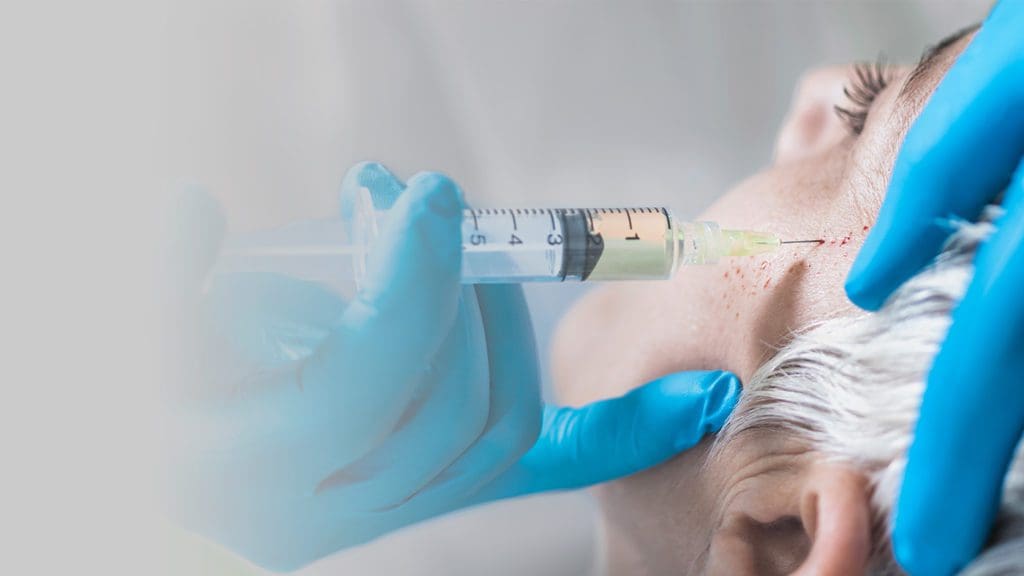
For neuromodulators like BOTOX®, inadvertently injecting near a vein primarily raises the risk of bruising, a common post-procedure complaint that affects patient satisfaction and can require downtime. The connection between procedural discomfort and patient satisfaction is well established in the clinical literature. A study published in the National Library of Medicine’s PubMed found that patient satisfaction with nursing care is strongly associated with the management of discomfort during routine procedures such as venipuncture, noting that when patients feel they are in capable, confident hands, satisfaction follows.
For dermal fillers, the stakes are higher. Vascular occlusion, while rare, is a documented complication of filler injection, with the glabella, nasolabial folds, and nasal region among the highest-risk areas. Bruising and post-procedure discoloration are far more common outcomes, but even these affect how patients perceive their results and whether they return.
None of this is meant to alarm. The vast majority of cosmetic injectable procedures are performed without incident. But it does illustrate why having better information about vein location before placing a needle is a reasonable clinical goal, particularly in high-risk facial zones.
A Growing Market Recognizes the Opportunity
The broader vein visualization market reflects this growing clinical interest. As reported in the Prescient & Strategic Intelligence Market Analysis, the vein illuminator devices market is projected to grow substantially through 2032. Notably, the sclerotherapy segment, driven in part by minimally-invasive aesthetic procedures, is the fastest-growing category – a signal that the aesthetic medicine community is increasingly recognizing the value of vein visualization technology in their work.
Using a Vein Finder for BOTOX® and Filler Procedures
A handheld vein finder like the NextVein V800NV uses near-infrared light to detect the position of blood in superficial veins and project that map directly onto the patient’s skin in real time. It requires no contact with the patient and is ready to use in seconds.
In an aesthetic setting, this gives the practitioner a non-invasive view of the patient’s superficial venous anatomy before any needle is placed. The vein map can be used to identify vessels in the planned injection zone, inform decisions about placement, and support a more systematic pre-injection assessment.
Near-infrared transillumination is a complement to good anatomical knowledge and technique, not a substitute for it. It provides good supporting visualization quality across the forehead, temple, periorbital area, cheeks, perioral area, lips, jowl, and neck — all areas commonly involved in injectable aesthetic procedures.
What This Means for Your Practice
Aesthetic practices that invest in tools supporting more precise, informed procedures tend to attract and retain patients who care about their outcomes. For practitioners offering BOTOX®, dermal fillers, and other injectables, a vein finder adds a visible layer of pre-procedure assessment, giving patients confidence in the process before the first needle is placed.
Reduced post-procedure bruising is one of the most common patient concerns after injectable treatments. While many factors influence bruising beyond vein contact alone, having a clearer picture of the facial vasculature before injection is a practical step toward more consistent outcomes and a better patient experience.
The NextVein V800NV is a handheld, near-infrared vein finder used across aesthetic practices, IV spas, and clinical settings. Weighing just 12 ounces, it is ready to use in seconds and requires no contact with the patient. Learn more at nextvein.com/applications/med-spas-cosmetic-injectables-iv-spas/.